


It's Brutal Out Here: Plagiarism and The Cancelling of Olivia Rodrigo
- Nov 23, 2021
- 8 min read
Updated: Mar 2, 2022
Olivia Rodrigo posing in a shoot for the promotion of her 'Sour Prom' concert film.

Who is Olivia Rodrigo?
If you haven't heard of Olivia Rodrigo, or at least listened to one of her songs, then you're probably living under a rock. Whether you want to admit it or not, Olivia is one of the biggest and hottest music stars in the world right now.
Debuting in January 2021, her first single "Drivers License" topped major music charts in LESS THAN A WEEK of its release and stayed atop the Billboard Hot 100 for almost 4 months straight.
Safe to say, Olivia is the real deal.
But there were many who believed she was only going to be a one-hit wonder. And while yes, those thoughts are valid, that has not been the case for Olivia.

Olivia has shown great promise and success even after the release of "Drivers License" — even though her music career is still relatively new.
Yet that doesn't mean that there haven't been questionable moments where people genuinely thought the rising star's career could end before it barely even started. Since her debut, Olivia has actually found herself in quite some trouble on numerous occasions.
The public reaction?
Usually backlash and an onslaught of people who have tried to "cancel" the rising star.
What exactly is Cancel Culture?
For those who aren't already familiar with Cancel Culture or the concept of being "canceled" in today's day and age, it's the idea that some person or public figure will lose their audience support after they have done something problematic and/or offensive. It's the idea of group shaming and the action of ostracizing an individual to boycott their message or action(s).
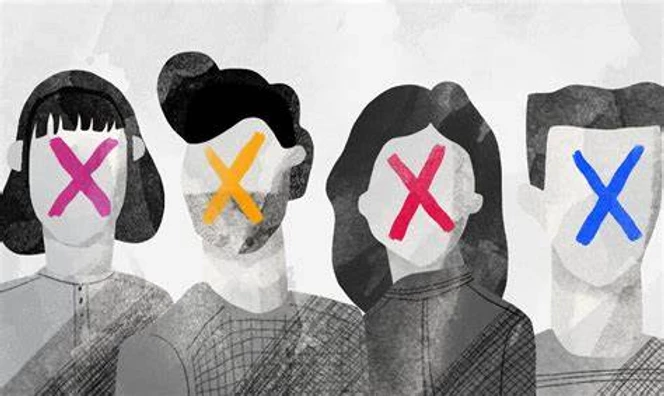
Oftentimes, the concept of canceling someone is accompanied by the idea that said individual will also lose their career and social circles. This is why those involved in Cancel Culture tend to also attack a person's friends, family, supporters, employers, etc.
The point is to shame and punish an individual so they have nothing left for them, except only to repent and acknowledge their wrongdoings.

What's interesting though is that there only needs to be a "wrongdoing" in the eyes of the accusers to give justification to canceling someone, so a person doesn't even have to do anything inherently wrong to be "canceled."
These groups will just attack when they decide it's time for you to go, and that's the scariest part of it all — not knowing when it will happen or what it will even be about.
Though there do exist challengers to Cancel Culture who argue that either "Cancel Culture isn't actually real" or that the action of "canceling" someone is just an online discussion blown out of proportion.
But let me assure you, Cancel Culture is very much a problem, and very much real.
The Cancelling of Olivia Rodrigo
On June 24, Courtney Love — American actress and lead singer of rock band Hole — called out Olivia Rodrigo for "allegedly" stealing a photo concept from one of her past albums.
Courtney made a point of mentioning the "rage-inducing" similarities between Hole's 1994 "Live Through This" album cover and Olivia's Sour Prom promotional image.
Courtney even posted a photo of the two images side by side, followed by the caption "Spot the Difference! #twinning!"

Initially, Olivia was ecstatic about the comparison, even commenting "love u and live through this sooooo much." All seemed well between the two, that is until Courtney made more reply comments that exposed how she really felt about the promo photo.
In her reply to Olivia, Courtney asked for flowers and a note from the star, even going on to bring Disney into the conversation in later comments.
"I've informed her I await her flowers and note. I sure hope it's long. Does Disney teach kids reading and writing? God knows. Let's see."
In several replies to comments under her Facebook post, Courtney also said:
“Stealing an original idea and not asking permission is rude. There’s no way to be elegant about it. I’m not angry. It happens all the time to me. But this was bad form. That’s not bullying or bomb throwing. This persons music has nothing to do with my life. Possibly never will. It was rude And I have every right to stick up for my work. Don’t gatekeep me! I’m honorable as f*ck to my fellow artists, and I expect the same.”

But who's to say Olivia was actually copying the 1994 album cover?
As far as I know, the "devastated prom-queen" concept has long been ingrained in American pop culture.
Even Von Unwerth, the photographer for the "Live Through This" album, has said that Courtney's concept for the album cover was directly inspired by Carrie. Likewise, Olivia has also explicitly shown that she drew inspiration from the same movie for her 'Sour Prom' concert film.
The day before Olivia's big announcements, Olivia actually posted her "biggest inspirations" for Sour Prom. This included the film Carrie — and hence the "devastated prom-queen" concept.
Yet, fans of Courtney would not back down.
Even though fans understood that both ideas were not wholly original, they had picked their side and made a case for it.
According to the internet, Olivia was nothing more than a copycat. And people were more than willing to "call her out" on it.
But here's the thing. If both parties openly took inspiration from the same source, why does one party get to have more established credit rights to it just because it's older? Courtney Love certainly didn't invent the concept of a "devastated prom-queen," and if anything, there's hardly ever something truly original these days anyway.
Yet still, the internet has always found a way to drum up some cancel-worthy outrage over Olivia's "latest case of plagiarism."
Specifically, netizens — avid users of the internet — had a ball-party after finding that Olivia's song "brutal" sounded quite similar to Elvis Costello’s 1978 smash hit “Pump It Up.”
One creator even mashed the two songs together to better hear the similarities.
And these Cancel Culture purveyors were reluctant.
They flooded Elvis Costello's Twitter with the content, seeming to hope for a backlashing comment from the artist.
But instead, Costello had this to say...
Here, Costello's tweet was alluding to the fact that "Pump It Up" was actually inspired by another hit, Bob Dylan's “Subterranean Homesick Blues.” And lo and behold, that 1965 hit was also inspired by another song, Chuck Berry's 1956 "Too Much Monkey Business."
So what's the big takeaway here?
Well, it's a fact that artists have to find inspiration from somewhere. Case in being, this usually means that artists borrow from other artists — whether that means officially or unofficially.

Olivia Rodrigo's Response
For Olivia, these Cancel Culture sentiments of pinpointed hate and criticism — because of these plagiarism accusations — have followed her music career with the release of almost every single one of her songs.
For netizens, they have canceled Olivia for the similarities of everything from Elvis Costello's "Pump It Up" riff ("brutal") to Taylor Swift's "Cruel Summer" ("déjà vu") to Paramore's "Misery Business" melody ("good 4 u").
But Olivia has always tried to give credit where credit is due.
She highlighted her inspiration of Carrie even before the promotion of Sour Prom, and Olivia has since amended the songwriting credits on "good 4 u" to include Paramore. Now, her hit "déjà vu" also lists Taylor Swift, St. Vincent's Annie Clark, and producer Jack Antonoff as contributors.
Yet still, these plagiarism accusations have never exactly gone away and are still a hot topic when it comes to talking about the star on social media.
In response to the claims, Olivia has commented on the issue by telling Teen Vogue that...
"nothing in music is ever new"
Olivia explains that "There's four chords in every song. That's the fun part — trying to make that your own." For the hitmaker, creating music is "sort of a fun, beautiful sharing process."
"What's so beautiful about music is that it can be so inspired by music that's come out in the past."

That said, Olivia has mentioned that the plagiarism allegations were still "disappointing." According to the chart-topper, it seemed many things were taken "out of context" in an effort to "discredit any young woman's work."

Along those lines, Olivia also called out the way that young women in the entertainment industry are disproportionately pressured into having a "perfect" reputation. Olivia explains,
"It's really toxic for young girls to open their Snapchat app and see the articles about young women who are just sharing their art and existing in the world, and watching them being torn apart for doing absolutely nothing."
Nevertheless, Olivia went on to add that she's still "just really proud and happy to say that my job is being a songwriter," as well as reiterating that "all music is inspired by each other."
The Takeaways
So what can we get from this story?
Well, first of all, those who "canceled" Olivia Rodrigo for her plagiarism were really just sour — yes, pun intended — that the artist's music topped charts, despite sounding similar to existing songs. But if you know anything about the music industry, all songs will sound similar to something that's already out there — regardless of one's efforts to try not to.
And that's just the fact of the matter.
So then we might ask, is "canceling" someone really worth the trouble?
Well, let's look at the facts of Olivia's case.
Sure the plagiarism accusations definitely stirred up some talk and gave Olivia more attention than she maybe would have wanted, but once something is brought to the forefront of the public's attention, it never really goes away. That said, the whole point of Cancel Culture is just to appease public distaste — as there is often a sense of moral and justified righteousness that comes with the act of "canceling" someone. But that brings forth another important question to be answered.
How do we know if the public's reason for "canceling" someone is "morally correct" and/or sensibly reached?
Surprise surprise, the answer is...we just don't know. The public can find issues with whatever they want whenever they want, so no one is actually exempt from ever being canceled.
In the case of Olivia Rodrigo, the public wanted to discredit Olivia's artistry just as much as they wanted her to acknowledge her "copycat" ways.
And in a way she did, but this Olivia accomplished by recognizing the artist-to-artist inspiration that has always been present in the music industry.
And though this might not have been the response frontline advocates of Olivia Rodrigo's cancellation may have wanted, these plagiarism accusations did prompt some reflection from the artist as she did eventually make her official statement about the matter in Teen Vogue.
So yes, the act of "canceling" someone does offer the potential for an individual to gain some personal insight — as well as set some accountability for oneself and their actions — but does that mean that Cancel Culture is the best way to go about "calling someone out"?
Definitely not.

If there is an issue between two public entities, those issues can certainly just be resolved in private.
If a fanbase or the general public has an issue with the action(s) of a person, these upset individuals can just revoke their support of them without making a dramatic fuss about it.
We should normalize communicating our issues without having the immediate desire to publicly shame and ostracize an individual.

Because at the end of the day, if a public figure or someone getting "canceled" genuinely believes they did something wrong, they'll have acknowledged and commented on it already — or immediately following the said action.
Forcing an apology out of someone never sits well with the public and the accused person anyway, so why bother going to the lengths of "canceling" someone if something genuine isn't going to come out of it?
Engaging in Online Discourse
Of course, none of us ever wants to find ourselves in a position where we could be potentially canceled.
So what's the best remedy for this?
The mass disapproval and group shunning associated with Cancel Culture are actually very much tied to online discourse and social media. Therefore, the best protection against being potentially canceled is just thoughtful online discourse.
Here, I've listed out a few ways you as an online user can engage in thoughtful online discourse.
Know yourself and your habits. If you're the type of person who immediately gets defensive when someone has an opinion that's different than yours, try being more open or even consider just giving yourself time to reflect so you can respond in a more composed manner.
Spend the time to do your research. With social media, it's extremely easy for misinformation or just information without context to spread. Be wary of what you're sharing and conversing about, especially if all you know about a topic is the headline of an article or what only one person has said about the issue.
Put yourself in someone else's shoes. Oftentimes, when all we're looking at is a screen, it's easy to forget that there's a person behind each one. Try seeing things from another's perspective and where they could be coming from and it'll be much easier to respond with thoughtful insights and compassion.

Comments