


Not Just a Black and White Narrative: Activism Across Decades
- Oct 20, 2021
- 6 min read
Updated: Mar 2, 2022
For people of color, the fight to end racial segregation and to seek out equality has long remained a historical struggle. Over the years, protests and boycotts have formed as a direct challenge to such injustices. The reason: a call for change.

Freedom Day. Or, otherwise known as a feeble attempt for those in Chicago's fragmented school district to obtain educational equity by calling attention to the segregation in schools.
The Chicago Freedom Day Boycott of 1963 was a public display of defiance for more than 200,000 Chicago public school students. Protesting the segregationist policies present in Chicago school districts, students showed their solidarity to the cause by walking out of their classes and marching the streets.
Supported by Martin Luther King, Jr. himself, the protest was a touching display of true community collectiveness for an important issue.

In Context
It was only a decade earlier that the Brown v. Board of Education of Topeka had actually made segregated public education unconstitutional. Yet even though Chicago schools didn’t maintain an "overtly" segregation policy, there was still a clear disparity between Black and white students in both their treatment and access to available resources.

What's worse? The problem could be linked to one single person.
Benjamin Willis.
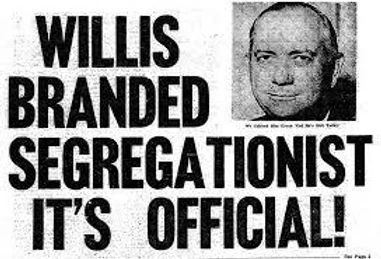
Acting as the Chicago Public Schools' Superintendent, he refused to address what essentially amounted to de facto segregation.
Willis simply refused to allow black students in horribly overpopulated schools to attend the city's far better equipped majority-white schools. And when asked why the Black schools were so much more underdeveloped than white ones, historian John L. Rury writes, Willis..
“claimed not to know how many Black or White students were enrolled in particular schools, since the district maintained ‘no record of race, color or creed of any student or employee.’”
So while Willis was busy improving conditions in schools in majority-white regions, schools located in majority-Black areas became far worse.
At the height of the situation, students were forced to attend classes in shifts. In 1960, roughly 33,000 Black students only attended school for four hours a day to accommodate all of the enrolled students. Even then, these classrooms tended to be crammed with over 40 students at a time. Yet overflow was still a reality, as hallways, basements, and even cafeterias were forced to be repurposed as classrooms.
Students and parents were furious alike. Involving over 200,000 children and tens of thousands of adults, the protests were a community effort to stand against Willis's protocols.
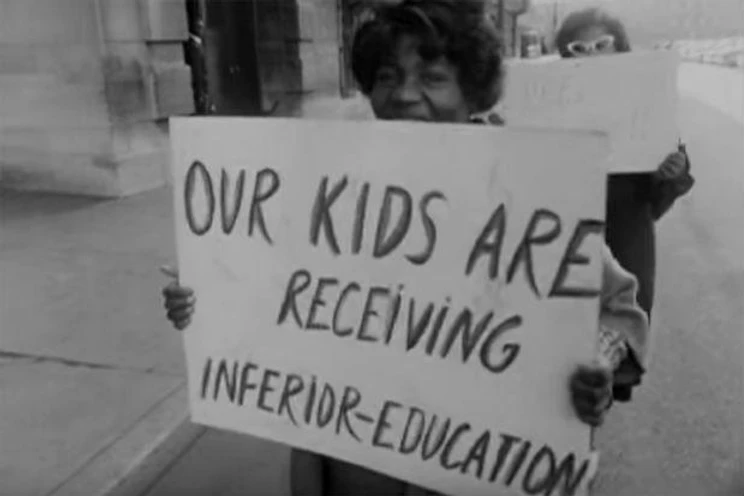
And though the demonstrations didn't have an immediate impact in changing Chicago district policies, they did inspire other major school protests against de facto segregation.
Presently, however, Chicago still remains one of the most segregated big-city school districts in the nation.
A Present-Day Reality
Black Lives Matter: 2013-Present
The Black Lives Matter movement (BLM) is an international activist-social movement wholly dedicated to fighting against systemic racism and anti-Black violence. Meant to condemn police brutality and the murder of Black people by police, the movement is meant to reassess our humanity and societal value on Black people, especially in comparison to the value prescribed to white people.

History of the Movement
Black Lives Matter was co-founded by three Black community organizers in their late 20s and early 30s: Patrisse Khan-Cullors, Alicia Garza, and Opal Tometi.
The trio formed BLM after George Zimmerman was initially acquitted from charges following his fatal shooting of unarmed Black teenager Trayvon Martin in February 2012. However, after the shooting gained the public's attention, Zimmerman was finally arrested and received charges for second-degree murder in April 2012.
Yet, the charges were not upheld.
In July of 2013, Zimmerman cited a controversial Florida law known as "stand your ground" that allowed him to make a case for acting in self-defense, effectively acquitting him of charges.
And, unsurprisingly, the nationwide protests continued.
2014, however, was a decisive moment for the BLM movement.

The BLM movement truly took on its persona as a national movement in 2014, after the police killing of 18-year-old Michael Brown.
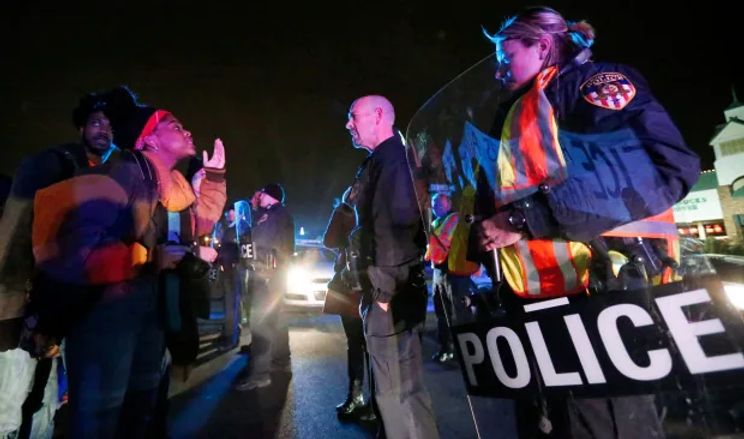
Shot and killed by white police officer Darren Wilson who did not face charges, BLM protesters filled the streets of Ferguson, Missouri shouting the name of Michael Brown.
And like the protestors who filled the streets of Chicago, many of these BLM protestors were students.
They were advocating for the conviction of officers — who so often were captured on video carrying out the shooting of these unarmed Black suspects — and denouncing gun violence.
A Harsh Reality
These protests still exist because these tragedies don't just stop being a reality.
The death of George Floyd, an unarmed Black man, by Minneapolis officer Derek Chauvin instigated massive public outrage in May of 2020. Despite Floyd's repeated cries about not being able to breathe, Chauvin continued kneeling on Floyd's neck for more than nine minutes.
And though the act was horrendous enough, it was the footage of a bystander's video capturing Floyd's last breaths that set off the public.
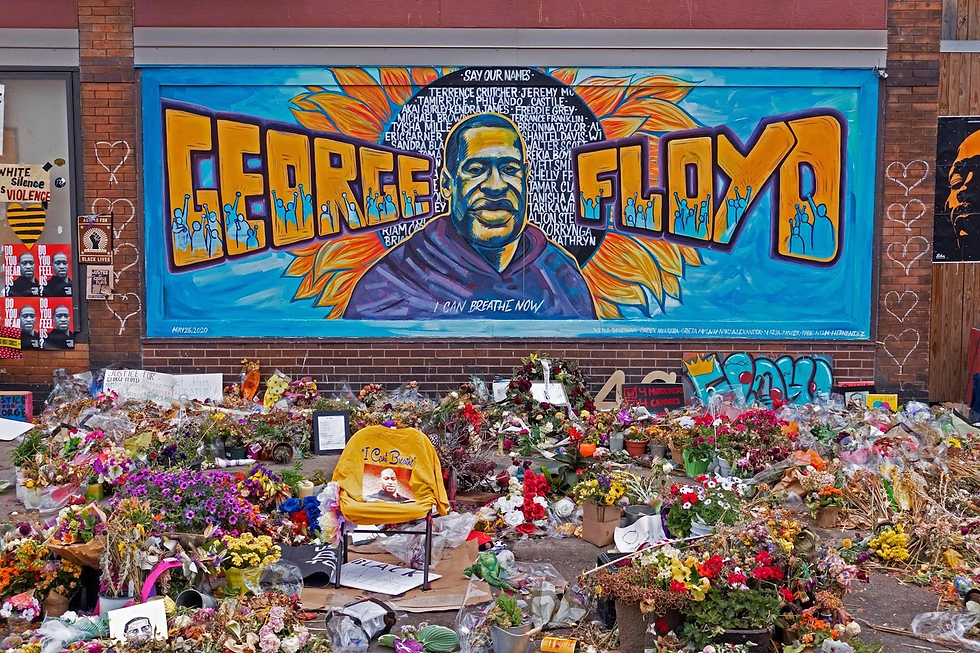
All across the globe, massive demonstrations held in the name of BLM appeared.
And so, it wasn't too long before the tragedy also brought national attention to the earlier deaths of two other African Americans: Ahmaud Arbery and Breonna Taylor. Even more, the deaths of Eric Garner, Freddie Gray, and Sandra Bland were spotlighted as names people need to speak, sparking BLM protesters all across the nation.
Social media also played a decisive role in the galvanization of support from around the world.
The popularization of hashtags such as #BlackLivesMatter, #HandsUpDontShoot, and #ICantBreathe spread like wildfire all across social media platforms. The hashtags managed to quickly share crucial information regarding the news stories themselves, while also immortalizing BLM as a forefront issue to discuss in contemporary activism.

In the Broader Sense
The Black Lives Matter movement has had a fundamental impact on the national conversation surrounding issues of racial inequality, racial profiling, and police brutality.
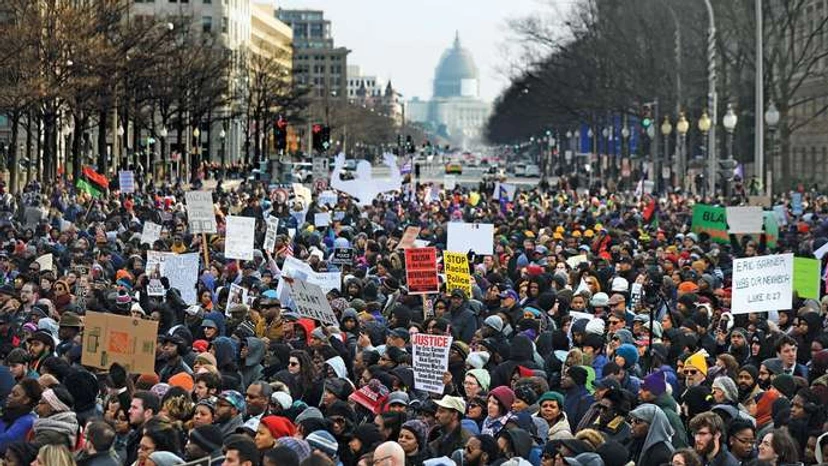
Though only initially focused on protesting the high rates of police violence and brutality against Black people and other minority communities of color, BLM protestors have since turned to targeting other institutionalized racial inequalities.
These are including, but are not limited to: the "school-to-prison" pipeline, high incarceration rates, and the general lack of educational resources in many minority Black and brown communities — the exact cause the '63 Chicago protestors focused their activism towards.
Of course, these shared sentiments are not the only similarities between the '63 Freedom Day protest and the BLM movement of today.
Other similarities include:
seeking the accountability and sentencing of officials for misconduct
a focus on the overall general unfair treatment of Black people
acknowledgment of the existence of institutions that maintain and perpetuate this unfairness
spark of community protests calling out these injustices
youth protestors consisting mostly of students

Alternatively, we could also examine how the two movements differ in action.
For one, the '63 protests were entirely focused on taking down just one authority figurehead, Benjamin Willis. However, the BLM movement does not just seek out the punishment of just one "to-blame" police officer, but more intensely is making a statement about the cruelty of entire police organizations and their training methods.
Further, the Freedom Day classroom walkouts were set in the context of school grounds, considering the focus of the activism itself. On the other hand, the Black Lives Matter movement has sparked protests in every city and location alike. People have stood in front of government buildings, raided downtown streets, laid their bodies on highways, and even marched into buildings and stores. If BLM protestors felt like their voice could be heard somewhere, they were sure to be there.

Looking to the Future
Of course, activism is not just a physical act.
Online activism has since evolved to become a powerful way for youth all across the world to get involved in conversations.
But how can you participate in doing so?
Remember that the difference between a successful and unsuccessful campaign is knowing your tools and available resources.
Learning the Tricks of the Trade:
Use hashtags. Know what information relevant to the cause is being widely shared and capitalize on that. Hashtags — such as #ICantBreathe and #HandsUpDontShoot — are what people are already narrowing down as the best way for a specific message to get across.
Humanize your content. Show and tell people exactly what you're feeling about a subject so you can be sure that your digital activism actually resonates with people. You'll more than likely get people to rally behind you if your words seem authentic and genuine.
Diversify your content according to what platform you're using. Every social media platform has a certain etiquette, audience, and type of engagement. Know your stuff and get creative with what you post or reshare.
Share the work of other activists. The best way for information to spread is to continue the conversation. Whether that means adding your own thoughts or simply resharing another's post, goals are more easily attainable and achieved with backed support. Of course, recognize who your audience is, and make advancing efforts to expand audience reach if this reshared info is actually only being circulated among a group of like-minded individuals.

Comments